

West African Street Food: Must-Try Dishes for Every Traveler
April 24, 2026
Why West Africa is the “New Mediterranean” for Wellness Seekers
May 11, 2026

For the modern traveler mother seeking more than just a passport stamp, a journey through West Africa is an invitation to witness the transition from “Queens to Mothers“; a narrative that weaves through ancient kingdoms and modern marketplaces alike.

yaa asantewaa
The Seat of Power: Ghana’s Matrilineal Majesty
In the heart of the Ashanti Region, the city of Kumasi stands as a testament to a unique social structure that often baffles Western sensibilities: the matrilineal system. In Ghana, particularly among the Akan people, lineage, inheritance, and royal titles are passed through the mother’s bloodline. This isn’t just an anthropological curiosity; it is the foundation of the Asante Kingdom.
When you visit the Manhyia Palace Museum, you aren’t just learning about Kings (Asantehenes); you are learning about the Ohemaa, or Queen Mother. She is the king-maker, the ultimate advisor, and the moral guardian of the community. Travelers today are increasingly seeking “Heritage Tours” that allow them to sit in the presence of these local leaders, witnessing a form of female empowerment that predates modern movements by centuries.
The legacy of motherhood in Ghana is perhaps best personified by Yaa Asantewaa, the Queen Mother of Ejisu, who led an army against colonial forces to protect the Golden Stool. To walk the grounds of the fortresses in Cape Coast or Elmina is to feel the weight of this history; the resilience of mothers who, even in the face of the Transatlantic Slave Trade, managed to plant the seeds of African culture across the globe.
Symbols and Spirits: The Adinkra of Motherhood
As you travel through the craft villages of Ahwiaa or Ntonso, keep an eye out for the Adinkra symbols. One particular symbol, Obaatanpa (The Good Mother), shaped like a womb or a heart, represents the nurturing and protective nature of the feminine. Modern travel trends show a surge in “Creative Tourism,” where visitors don’t just buy these symbols but sit with artisans to learn the art of stamping and dyeing. Understanding these symbols transforms a simple souvenir into a profound recognition of the African mother’s role as the “Anchor of the Home.”
In Ghana, the celebration of motherhood extends to the Abadinto (naming ceremony). Tourists who engage in community-based tourism may be lucky enough to witness this: a newborn is introduced to the world on the eighth day, and the mother is honored with gifts of white cloth and jewelry, symbolizing her victory in bringing life into the world.
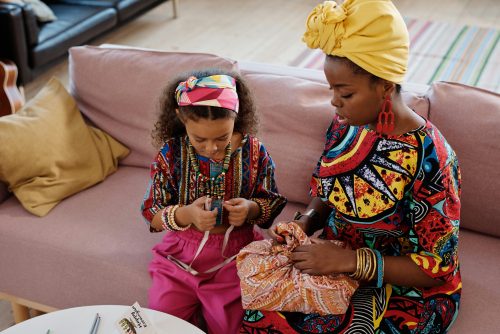
African mother
The Market Queens and the Warrior Mothers
The narrative of the African mother shifts beautifully as you cross into Togo and Benin. Here, the “Mother” is also a titan of industry. In the Grand Marche of Lomé, you will meet the Nana Benz. These legendary women became millionaires by controlling the trade of wax print fabrics (Vlisco). They earned their name because they were often the only people in the country wealthy enough to drive Mercedes-Benz cars. To walk through these markets is to see motherhood in its most industrious form; women carrying babies on their backs while negotiating international trade deals.
In Benin, the birthplace of Voodoo, motherhood takes on a spiritual dimension. The deity Mami Wata represents the fertile, often unpredictable power of the water, a feminine force that is both feared and revered. Travelers can visit the historical sites of the Kingdom of Dahomey to learn about the Mino (Our Mothers), the all-female military regiment known to the world as the Dahomey Amazons. They were the fierce protectors of the King, proving that in West African culture, the “Mother” is both the nurturer and the shield.

happy african mother
The Hospitality of the Matriarch: Senegal and The Gambia
Further west, in Senegal and The Gambia, the honoring of motherhood is found in the concept of Teranga; an unparalleled spirit of hospitality. In a Senegalese household, it is the matriarch who dictates the flow of the home. The preparation of Thieboudienne (the national dish) is a ritual led by the mother, a labor of love that can take an entire afternoon.
For the heritage tourist, a visit to Gorée Island off the coast of Dakar is a somber but necessary pilgrimage. It is a place to reflect on the “Mothers of the Diaspora.” Many African Americans returning to West Africa during the “Year of Return” and beyond describe an emotional “reconnection” to the African motherland; a feeling of coming home to the embrace of an ancestral mother.

mothers day 2026
Modern Trends: Why Travelers are Choosing the “Matriarchal Route”
Current travel data suggests a shift toward Empowerment Tourism and Matrifocal Travel. Travelers are no longer content with viewing Africa through a lens of struggle; they want to see the “Queens.” This includes:
- Female-Led Tours: Boutique travel agencies are now offering itineraries curated and led entirely by West African women.
- Ancestry Travel: Using DNA results to trace lineages back to specific ethnic groups in Ghana or Benin, often focusing on maternal lines.
- Textile Tourism: A focus on the “Mother’s Cloth”; learning the history of woven fabrics and the stories they tell about family and status.

mothers day
A Journey of the Soul
To travel through Ghana, Togo, Benin, Senegal, and The Gambia is to realize that the African mother is the thread that holds the tapestry of West African society together. She is the Market Queen, the Priestess, the Farmer, and the Ohemaa.
As you stand on the shores of the Atlantic or walk through the lush forests of the Ashanti highlands, you realize that you aren’t just visiting a destination; you are witnessing a living monument to the feminine spirit. From the ancient Queens who led armies to the modern mothers who lead economies, West Africa invites you to honor the source of it all. This is more than a vacation; it is a pilgrimage to the cradle of humanity, where every “Nana” and “Yayi” welcomes you home with open arms. Happy mothers day!